

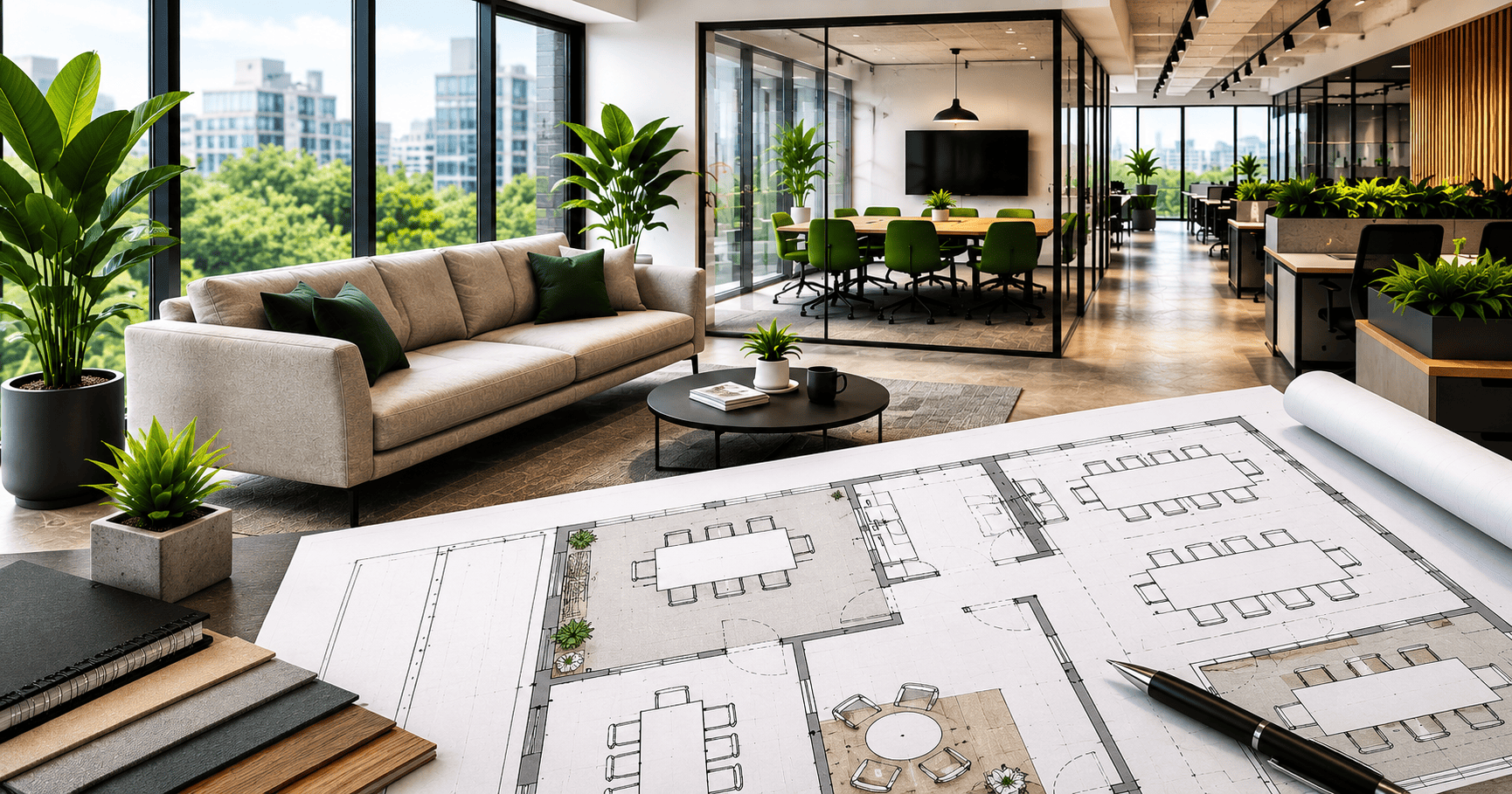
Strategic Space Planning: A Practical Guide to Optimizing Your Office
Your office is not just where work happens. It influences how people move, focus, collaborate, and feel throughout the day.
When office design focuses only on aesthetics, it can unintentionally hinder productivity and employee well-being. Strategic space planning takes a more purposeful approach, ensuring every part of the workplace supports business goals, enhances daily workflows, and creates a better experience for the people who use it.
What Is Space Planning?
Space planning is the process of intentionally designing a workplace to support your organization’s goals, culture, and workforce well-being. Instead of focusing only on cost per square meter or fitting in as many desks as possible, strategic space planning starts with one key question: What does your business actually need from this space?
It considers factors such as:
- How your team currently uses the office
- Where distractions or workflow issues occur
- How your headcount may change over time
- What types of work your employees perform daily
These insights are then translated into a practical workplace layout, including furniture placement, acoustic zoning, circulation flow, and functional work areas. When done well, space planning can reduce wasted space, improve day-to-day efficiency, support employee comfort, and make future changes easier to manage.
Start with a Space Utilization Audit
Effective space planning starts with understanding how your office is actually being used. A space utilization audit helps identify which areas support daily work and which are underused, overcrowded, or create friction.
A good audit looks at questions such as:
- Which desks, meeting rooms, and shared areas are used most often?
- Are large meeting rooms being used for small calls or one-on-one discussions?
- Which spaces do employees avoid because of noise, poor lighting, or lack of comfort?
- Where do informal conversations and collaboration naturally happen?
- Are there bottlenecks, such as narrow walkways or poorly placed shared equipment?
Data can come from room booking systems, badge access records, occupancy sensors, staff feedback, or simple observation. The findings often reveal practical opportunities, such as reducing the number of unused desks, resizing meeting rooms, improving quiet zones, or repositioning shared facilities.
By starting with real usage data, you can make space planning decisions based on actual needs rather than assumptions.
Align Space with Business Goals
Once you understand how your office is being used, the next step is to define what you need the space to achieve. A well-planned workplace should support your business goals, adapt to future needs, and help employees work more effectively.
Consider these key factors:
Growth Trajectory
Plan for where the business is heading, not just where it is today. If your team is expected to expand, use modular furniture, flexible layouts, and expansion zones so the office can support future headcount without a full redesign.
Work Style and Workflow
Match the space to how teams actually work. For example, creative teams may need collaborative zones, while finance, legal, or client-facing teams may need quieter rooms and more privacy.
Hybrid Work Policies
If not everyone is in the office daily, avoid overbuilding fixed desks. You may use hot-desking, neighborhood seating, and booking systems to make better use of space while keeping the workplace organized.
Balance Collaboration and Focus Zones
One of the biggest mistakes businesses make is expecting one space to support every type of work. Employees switch between collaborating, attending meetings, making calls, and focusing on individual tasks throughout the day, so the workplace should support these different activities.
Providing a variety of work settings allows employees to choose the environment that best suits the task at hand. This can improve productivity, minimize distractions, and create a more comfortable and effective workplace.
Create Collaborative Zones
Set aside dedicated spaces for meetings, brainstorming, and team discussions. This could include meeting rooms, project tables, lounge seating, or open collaboration areas where conversations won’t disturb others.
Provide Quiet Focus Areas
Employees also need places where they can concentrate without interruptions. Consider quiet rooms, phone booths, private pods, or acoustic workstations for tasks that require deep focus or confidential conversations.
Include Transition Spaces
Small breakout areas, standing tables, or semi-private corners can act as buffers between busy and quiet zones. These spaces are ideal for quick discussions or phone calls without disrupting colleagues nearby.
Plan Team Adjacencies Around Daily Workflow
Think about which teams need to work closely together and which areas need more separation. The goal is to make collaboration easier while reducing unnecessary noise and disruption.
- Place Connected Teams Near Each Other: Sales and customer support may benefit from being close because they often share updates quickly.
- Support Quiet or Specialized Teams: Creative, finance, or HR teams may need access to shared spaces while staying away from high-traffic or noisy areas.
- Position Shared Resources Carefully: Coffee stations, printers, and pantries can encourage interaction, but they should not disrupt focus zones.
- Plan Client-Facing Areas Well: Keep reception and meeting rooms easy to access, while separating visitor areas from private work zones.
Make Your Floor Plan Work Harder
A good floor plan should make the office easier to use, not just look organized. Pay attention to these practical details:
- Circulation Space: Keep walkways wide enough for people to move comfortably without squeezing past desks, chairs, or storage units.
- Natural Light: Place workstations where employees can benefit from daylight, while meeting rooms and storage areas can sit in less light-sensitive zones.
- Storage Planning: Plan storage early for personal items, documents, equipment, and supplies so the office does not become cluttered later.
- Technology Infrastructure: Map out power points, data ports, Wi-Fi coverage, cable routes, and meeting room AV needs before finalizing the layout.
Partner with Office Fit-Out Specialists
Strategic workspace planning involves many connected decisions, from layout and circulation to lighting, acoustics, compliance, and future flexibility. A small change in one area can affect how the entire office functions.
As office fit-out specialists, Manila Commercial Fit-out Corporation can help turn your space strategy into a practical, compliant, and well-executed office design. Our team can assist with:
- Analyzing your current space and usage needs
- Developing layout options based on your workflows
- Coordinating requirements across stakeholders
- Managing the fit-out process from design to delivery
- Supporting compliance with local building codes, safety standards, and PEZA requirements where applicable
Don’t let your office layout remain an afterthought. Speak with us early in your planning phase to avoid common layout issues, improve workspace efficiency, and make better use of your commercial space.